Wall Printing Technology and Features — What the WallPrintGear Line Shares
The WallPrintGear machines are one platform family with one gear system: the same rail-guided platform, the same UV LED curing, the same tier-1 print heads, the same software workflow, and the same factory quality behind every model. This page lays out the technology and features shared across the line — and a feature-by-machine matrix showing which machine has what. When you're ready for the numbers, the full specs for each machine live on its product page.
Prefer the numbers first? Download a spec sheet from the free download center — no form-gate to browse.


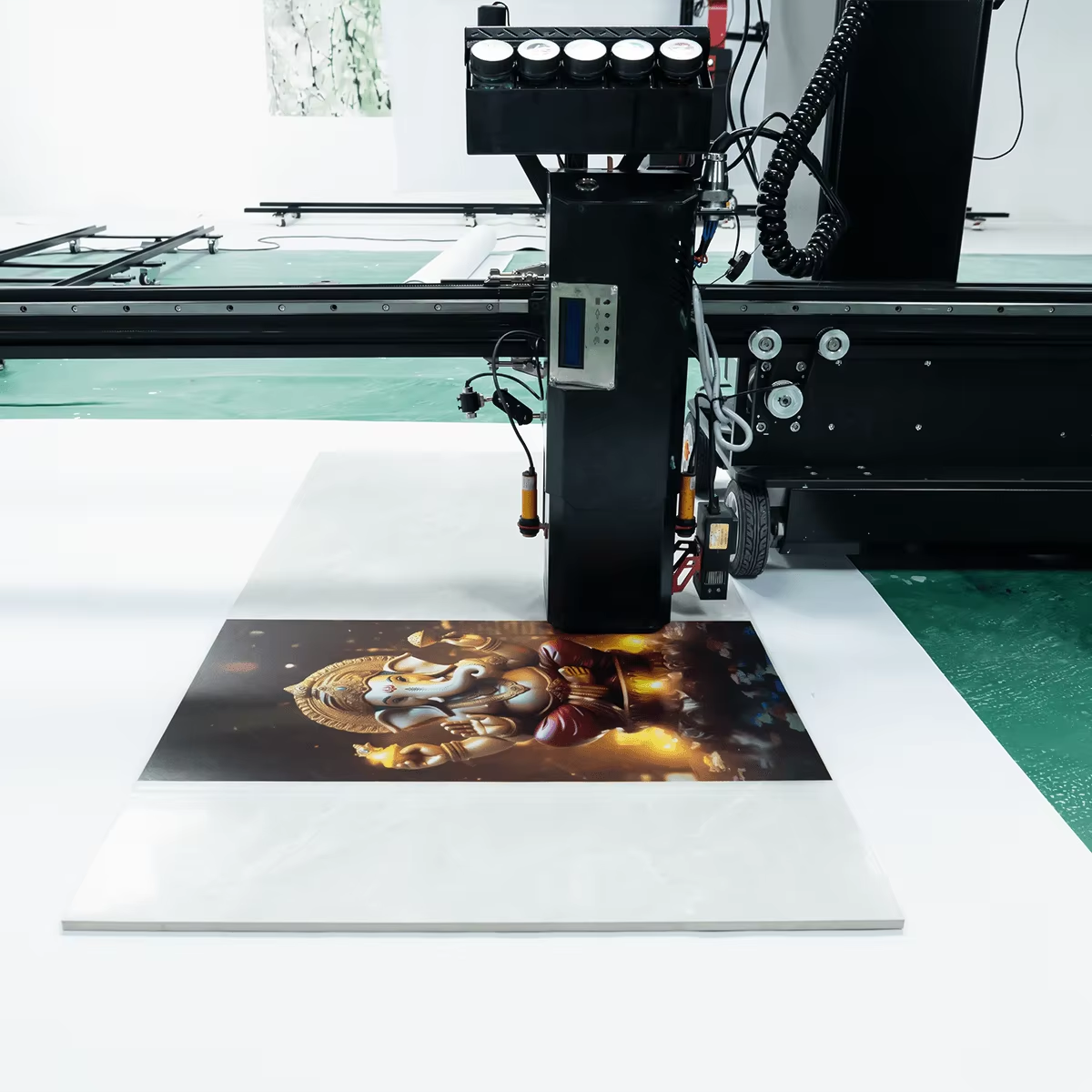
One Platform Family Across the Line
The WallPrintGear machines aren't four unrelated products. They're one platform family built on the same core technology — the same kind of rail-guided carriage, the same UV LED curing, the same tier-1 print heads, and the same software workflow — configured for different jobs. A vertical machine faces a standing wall; a floor machine works horizontally over the ground; the flagship runs one platform in more than one configuration. What changes is the format and the reach; what stays the same is the underlying gear system.
That's what this page is about: the features shared across the line, grouped four ways below, and then a matrix showing which machine carries which feature. The exact numbers — resolution, print area, speed, weight — differ by machine, and each machine's product page has its full spec table. This page is the map; the product pages are the detail.
The Technology and Features Shared Across the Line
Across the line, the shared technology sorts into four groups: the platform, the curing and ink, the software and workflow, and the support and quality behind every machine. Here's what each one is, and which machines carry it — with a link to the product page whenever you want the numbers.
The Platform — Rail-Guided, Configured Per Job
- What's sharedEvery machine drives a print head along a rail-guided carriage, so the head tracks a precise path across the surface. That rail-and-carriage platform is the common backbone of the whole line.
- How it varies by machineThe entry vertical machine uses a self-supporting rail sized for indoor walls (vertical wall printer). The flagship runs a 3-axis vertical rig as one platform in more than one configuration (wall printer machine). The floor machine applies the same idea horizontally, printing down onto the ground (floor printer).
- One feature that isn't sharedDual-layer 3D relief — building up printed texture rather than a flat image — is specific to the flagship's 3D configuration, not the rest of the line. If layered relief is what you're after, that's a flagship-platform question; the full configuration story lives on the flagship page.
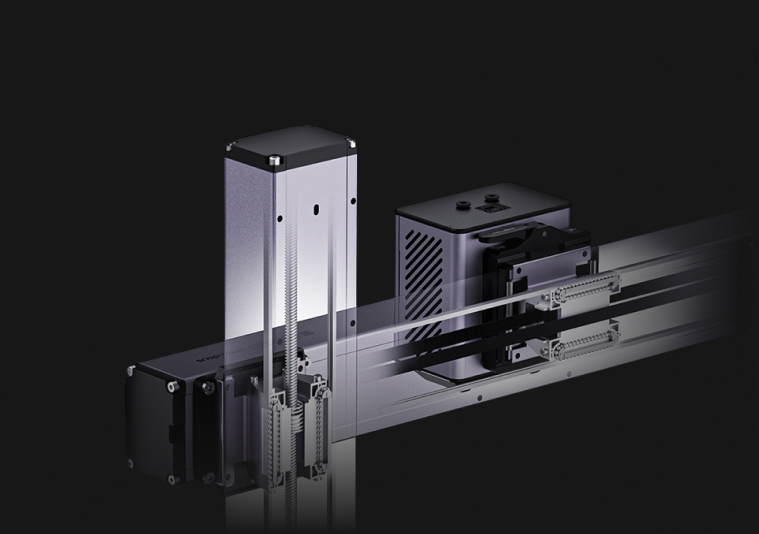 Rail-guided carriage
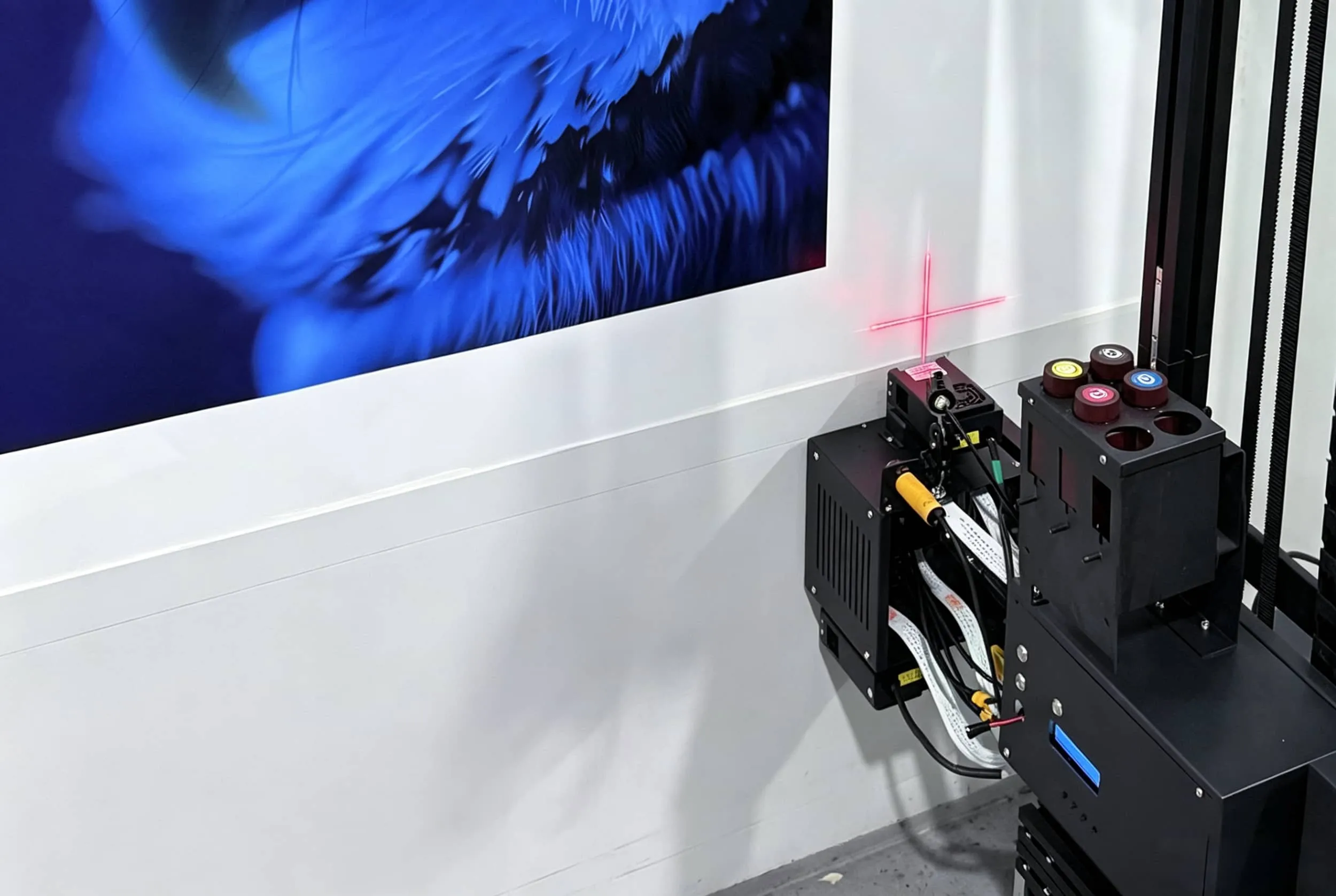 UV LED · tier-1 heads
Curing and Ink — UV LED and UV-Curable Ink, Line-Wide
- What's sharedEvery machine prints with a UV-curable ink system and cures it with a UV LED on contact — the ink dries the instant it lands instead of running or smudging. That's the same curing principle whether the machine is printing a vertical wall or a horizontal floor, and it's what makes direct-to-surface printing work at all (the how and why is on how it works).
- The print headsAll models use tier-1 piezo print heads — the industrial-grade head class the whole line is built around. (We keep head models under NDA, but the class is consistent across the line.)
- Where the numbers liveHow fine the detail is, how fast it lays ink, how the head is configured — those are per-machine specs on each product page, not features that differ in kind. If you print outdoors, the UV-cured ink and weather durability details sit alongside the ink range on inks & liquids.
The Software and Workflow Every Machine Shares
- What's sharedEvery machine runs the same software layer — image processing to prep the file, a job queue to manage the print, and scene presets to set up common jobs quickly. It's the part of the system that turns a design file into a machine-ready print, and it's consistent across the line so the workflow you learn on one machine carries to another.
- Why it matters for comparingBecause the software and workflow are shared, moving between an entry machine and the flagship isn't a fresh learning curve — the gear system and the way you drive it stay the same. That's a big part of what "one platform family" means in practice.
- Where to go nextThe step-by-step of taking a file to a finished wall is on how it works. If you're weighing the machine as the core of a business setup, business opportunity covers what surrounds it.
 Shared software layer
 QC · warranty · support
The Same Quality and Support Behind Every Machine
- What's shared — qualityEvery machine goes through a 5-checkpoint QC process and a 24-hour burn-in before it ships, and the line holds CE, FCC, RoHS and ISO 9001 (certificate numbers under NDA). The build and testing standard doesn't change by model.
- What's shared — supportEvery machine carries a 12-month parts warranty, backed by a factory-direct after-sales chain, with spare parts stocked for 5 years or more and a 7-day transit-damage window. You can order a single unit — no full-container minimum.
- The company behind itFactory-direct since 2018, shipping to 47 countries, producing 120–180 units a month — the same operation stands behind every machine on this line, not a different one per model.
Features by Machine
This matrix shows which machine carries which feature — a quick way to see how the line differs in kind, not in numbers. The cells mark whether a feature is present and, where it matters, in what form. For the actual specs — resolution, print area, speed and the rest — follow the machine's column header to its product page.
| Feature |  VerticalEntry VerticalEntry |
 Flagship3D config Flagship3D config |
 FlagshipUV config FlagshipUV config |
 FloorHorizontal FloorHorizontal |
|---|---|---|---|---|
| Rail-guided carriage platform | ✓Yes | ✓Yes | ✓Yes | ✓Yes |
| 3-axis vertical rig | No | ✓Yes | ✓Yes | No |
| Self-supporting entry rail | ✓Yes | No | No | No |
| Horizontal floor printing | No | No | No | ✓Yes |
| Dual-layer 3D relief | No | ✓Yes | No | No |
| UV LED curing (on contact) | ✓Yes | ✓Yes | ✓Yes | ✓Yes |
| UV-curable ink system | ✓Yes | ✓Yes | ✓Yes | ✓Yes |
| Tier-1 piezo print heads | ✓Yes | ✓Yes | ✓Yes | ✓Yes |
| Shared software & workflow | ✓Yes | ✓Yes | ✓Yes | ✓Yes |
| 5-checkpoint QC + 24h burn-in | ✓Yes | ✓Yes | ✓Yes | ✓Yes |
| CE / FCC / RoHS / ISO 9001 | ✓Yes | ✓Yes | ✓Yes | ✓Yes |
| 12-month parts warranty | ✓Yes | ✓Yes | ✓Yes | ✓Yes |
| Best-fit orientation | Vertical walls | Vertical walls | Vertical walls | Horizontal floors |
Full per-machine specs live on each product page → Entry vertical · Flagship platform (3D + UV configs) · Floor printer
Comparing Machines? Tell Us Your Scene
Now you've got the map — the features the line shares and which machine has what. If you're weighing which machine fits, tell us your scene — the kind of walls or floors you'd print and where — and you get back a machine recommendation plus a factory-direct quote: which model fits, and what it would take to start. Not sure which yet? That's fine — say so and we'll help you narrow it down, no pressure.